
1-3 Piezo composites
The number one choice for premium ultrasound transducers

Lower acoustic impedance
from 5MRayl to 27 MRayl
High coupling coefficients
typically 0.61 to 0.75
High bandwidth and lower Qm
The material of choice for high-end ultrasound transducers
1-3 piezo composites have become the material of choice for many high performance ultrasound transducers since their invention by R.E. Newnham and L.E. Cross in the late 1970s.
A variety of piezoelectric composite materials can be made by combining piezo ceramic elements with a passive polymer such as epoxy or an active polymer. Piezo composites are classified according to their connectivity (such as 2-2, 1-3, 0-3, etc.). Connectivity is defined as the number of dimensions through which the material is continuous. It is conventional for the first digit to refer to the piezoelectrically active phase.
Prof. Newham defined the family of interconnectivity of piezo electric composites as shown in one of his drawings below. Today, piezo composites used in ultrasound transducers on the market are typically of the 1-3 and 2-2 connectivity.
The largest single market for the 1-3 piezo composite is the medical diagnostic ultrasound market, which utilizes more 1-3 piezo composites than all other markets combined. Current medical ultrasound imaging systems would not be possible without advances in 1-3 piezoelectric composite materials.
Smart Material manufactures and distributes piezoelectric composite materials with 2-2 and 1-3 connectivity. As one of the few companies in the world, Smart Material uses different manufacturing technologies for the production of 1-3 composites.
1-3 Composite types
Learn more about the available 1-3 composite types manufactured by Smart Material.
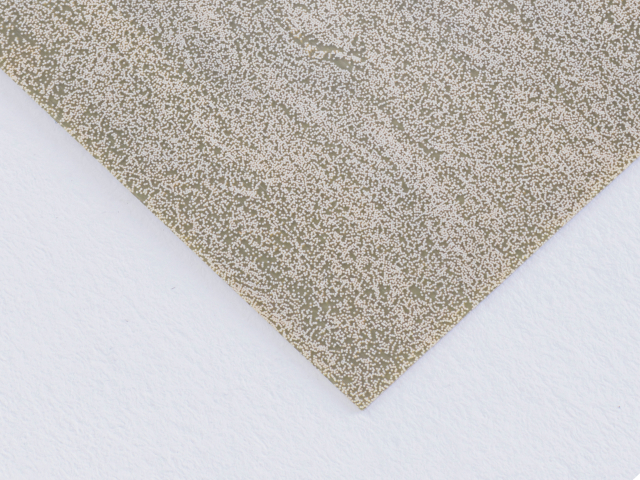
1-3 Arrange & Fill
Random Fiber
Using the patented Arrange & Fill method, we produce 1-3 composites using piezo ceramic fibers as active rods, randomly distributed over the composite active area.
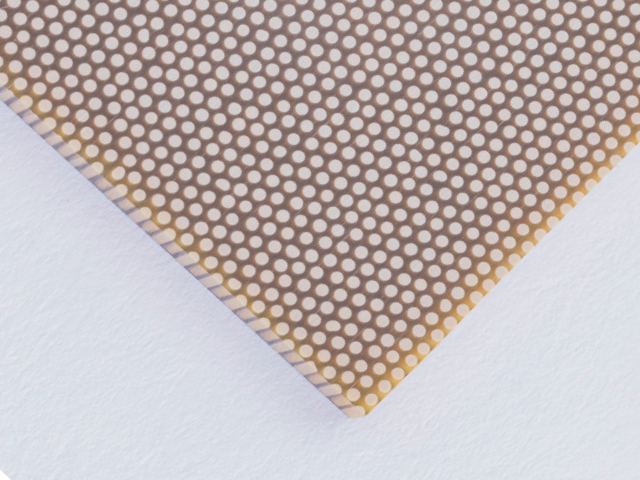
1-3 Arrange & Fill
Regular Fiber
Using the patented Arrange & Fill method, we produce 1-3 composites using piezo ceramic fibers as active rods. Regular fiber distribution is achieved by arranging the fibers with fixed spacing.
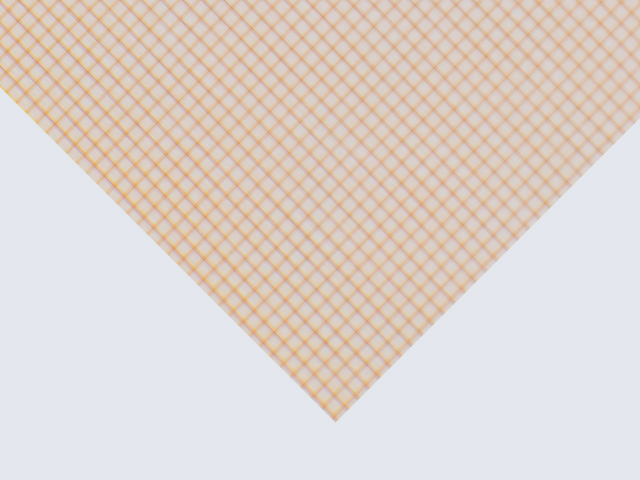
1-3 Dice & Fill
Composites
We manufacture 1-3 composites using the standard Dice & Fill method, which is the current industry standard for frequencies above 500kHz.
Utilizing different manufacturing technologies for 1-3 piezo composites, Smart Material is able to provide 1-3 composites for frequencies from 80kHz to 10MHz, with fill factors ranging from 15% to 80% and sizes up to 100mm by 100mm (4 inches by 4 inches).

Resource Center & FAQs
Have a question or need more information? Find answers to frequently asked questions and additional insights in our Resources section.
FAQs
Browse our FAQ section for quick answers to the most common questions and other helpful information.
Downloads
Find a collection of general information and deeper insights into our products available for download.
References & Publications
Explore our references and publications for a deeper insight into our materials and projects.